Founder and CEO · Leads product and partnerships.
Catch Foot Risk Before Wounds Start
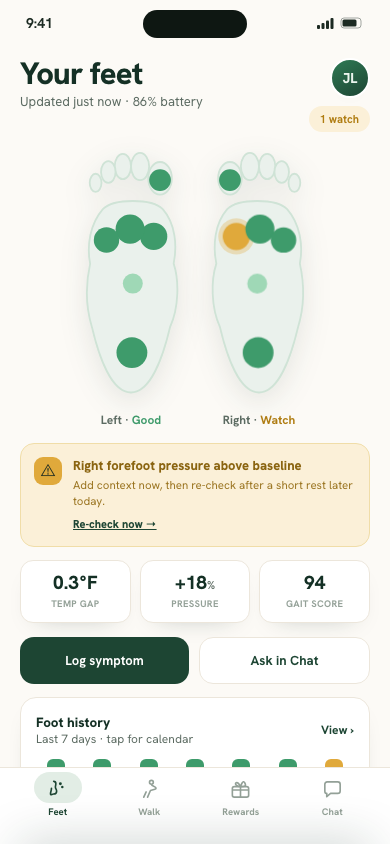
When neuropathy reduces feeling, pain can arrive after the damage. Mi Terro Care Socks are being developed to track temperature, pressure, gait, and activity so you can share changes with your care team.

As Seen In
Forbes | TechCrunch | Business Insider
Pain Is a Late Warning
Heat and pressure can build long before a blister or ulcer is visible. Daily trends add another warning signal when feeling is no longer reliable.

- 19–34% estimated lifetime foot-ulcer risk among people with diabetes
- 2-3 days earlier temperature change can appear before visible damage
- 4 signals create one daily baseline
Catch Heat and Pressure Before Skin Breaks
Track the changes neuropathy can hide, then share a clear trend with the people helping you manage risk.

Temperature finds hot spots
A persistent difference between feet can be a reason to offload and check in.
Pressure reveals repeated load
See where the same area keeps taking more force with every step.
Gait and activity add context
Know whether the change followed a long day, a slower stride, or lower activity.
Wear Daily. Wash Normally.
Remove the module, wash the socks, and keep a personal foot baseline without adding another device to your day.

Daily Wear to Clear Alerts
Designed to let you share all four signals—temperature, pressure, gait, and activity—with caregivers and doctors in real time.
Wear your socks daily
Put them on like any other socks. Embedded sensors begin monitoring temperature, motion, and pressure patterns immediately.
Your baseline learns what is normal
Personal trends make a meaningful change easier to spot than a generic average.
Get alerts in time to act
Designed to flag a change worth checking, so you can contact your care team with a clearer picture.

Foot Experts Behind Every Alert
Mi Terro combines diabetic-foot expertise, wearable engineering, e-textiles, and AI to turn daily changes into clear next steps for users and care teams. You are not left alone with raw charts.

Clinical advisor
Dr. David G. Armstrong
Distinguished Professor of Surgery and Neurological Surgery at USC. His work in diabetic-foot care and limb preservation helps guide what Mi Terro measures and how we evaluate it.
Built by specialists across the whole sock
CTO · Stanford-trained mechanical engineer leading device design.
Head of Engineering · Stanford-trained researcher focused on gait and pressure intelligence.
Materials R&D experience at ANTA · Leads sock comfort and manufacturing.
Foot Data for Care Decisions
01Diabetes
Notice what you may not feel
Heat and pressure trends can reveal a change worth checking when sensation is reduced.
02Gout
See the pattern between flare-ups
Follow local heat, load, gait, and activity changes over time.
03Care-team follow-up
Bring a clearer story to care
Share a trend with your clinician so the conversation starts with more than a snapshot.
Do Not Wait for Pain
Join early access and build a daily baseline before the next hot spot, gait change, or flare catches you off guard.